Resume Tips for Freshers in India: A Practical Job Search Checklist for 2026
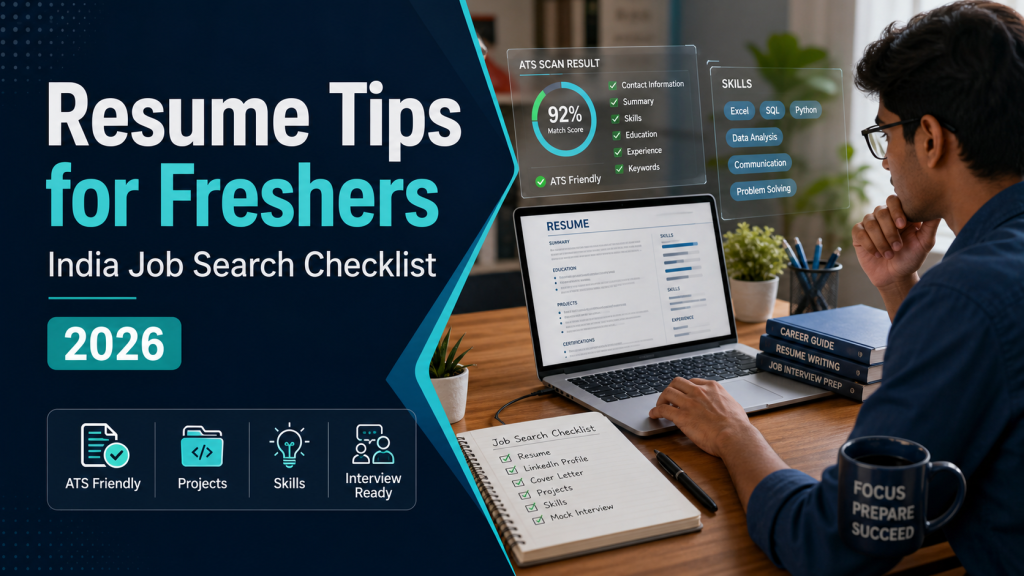
Writing a resume as a fresher can feel confusing because you may not have years of work experience to show. The good news is that recruiters do not expect a fresher resume to look like a senior professional profile. They expect clarity, honesty, relevant skills, and proof that you can learn quickly. A strong fresher resume should make it easy for a recruiter to understand what role you want, what you know, what you have built, and why you are ready for the next step.
This guide is written for students, recent graduates, and entry-level job seekers in India who are applying for private jobs, campus drives, internships, apprenticeships, government-adjacent roles, and trainee positions. Use it as a practical checklist before sending your resume to any employer.
1. Start With a Clear Resume Header
Your resume header should be simple and professional. Add your full name, phone number, email address, city, LinkedIn profile, and portfolio or GitHub link if relevant. Avoid adding too many personal details. In most cases, you do not need to include your full address, marital status, religion, or unrelated personal information.
Use a professional email address that includes your name. If your current email looks casual or confusing, create a new one for job applications. Recruiters often scan hundreds of resumes in a short time, so small details like a clean email address and correct phone number matter.
2. Write a Short Career Summary
A fresher resume does not need a long objective copied from the internet. Instead, write a short career summary of two to three lines. Mention your qualification, target role, strongest skills, and one proof point such as a project, internship, certification, or academic achievement.
Example structure: recent graduate in your field with hands-on experience in a specific tool, project, or domain, seeking an entry-level role where you can apply those skills. Keep it specific. A generic line such as “seeking a challenging position in a reputed organization” does not help a recruiter understand your value.
3. Match Your Skills to the Job Description
Before applying, read the job description carefully and identify the required skills. For a software role, this might include programming languages, databases, testing, cloud basics, or problem-solving. For a non-technical role, it may include communication, Excel, customer support, sales, operations, research, or documentation.
Add only the skills you can discuss in an interview. If you include Java, SQL, Excel, digital marketing, accounting, or any other skill, be prepared to answer basic questions and explain where you used it. A smaller list of honest skills is stronger than a long list that you cannot defend.
4. Use Projects as Experience
Freshers often worry because they do not have full-time work experience. Projects can solve that problem. Academic projects, personal projects, mini projects, internships, volunteering work, freelancing assignments, and practical coursework can all show ability.
For each project, include the project name, your role, tools used, and the result. Do not write only “completed project on website development” or “worked on machine learning.” Explain what the project did, what problem it solved, and what you personally contributed. Use action words such as built, designed, analyzed, tested, automated, documented, improved, or presented.
5. Keep Education Details Easy to Scan
Your education section should include degree, college, university, year of completion, and marks or CGPA if they are required or strong. If you are applying for campus or government-related opportunities, ensure the education details exactly match your documents.
If you have backlogs, gaps, or lower marks, do not try to hide them with confusing formatting. A clear resume with honest information is better than a resume that creates doubt. You can use the interview to explain growth, improvement, and what you have learned.
6. Add Certifications Carefully
Certifications can help when they are relevant to the job. Add course name, platform or provider, and completion year. If possible, include what you learned or built during the certification. Avoid filling half the resume with unrelated certificates, especially if they do not connect to your target role.
For technical freshers, useful certifications may include programming, cloud fundamentals, data analysis, cybersecurity basics, testing, or domain-specific tools. For management and commerce freshers, useful certificates may include Excel, accounting software, digital marketing, HR basics, business analytics, or communication skills.
7. Make the Resume ATS Friendly
Many companies use applicant tracking systems to filter resumes. To keep your resume ATS friendly, use a clean layout, standard section headings, simple fonts, and keywords from the job description. Avoid heavy graphics, tables that break formatting, unusual icons, and text hidden inside images.
Use section headings such as Summary, Skills, Education, Projects, Internship, Certifications, and Achievements. Save the resume as a PDF unless the employer asks for another format. Name the file professionally, for example: YourName_Resume.pdf.
8. Focus on Achievements, Not Only Duties
Wherever possible, show outcomes. Instead of writing “participated in college event,” write what you handled, how many people were involved, what tools you used, or what result was achieved. If exact numbers are not available, describe the impact clearly without exaggeration.
Freshers can include achievements such as hackathon participation, paper presentations, leadership roles, NSS or NCC activities, sports achievements, academic awards, project demos, internships, volunteering, or online portfolio work. Choose achievements that show discipline, teamwork, communication, ownership, or problem-solving.
9. Avoid Common Fresher Resume Mistakes
Do not use the same resume for every job. Do not add false experience, copied objectives, spelling mistakes, or skills you cannot explain. Avoid very long resumes. For most freshers, one page is enough. If you have strong projects, internships, and achievements, two pages can be acceptable, but keep it focused.
Also avoid adding salary expectations, family details, unrelated hobbies, or references unless requested. Your resume should answer one main question: why should this candidate be shortlisted for this role?
10. Prepare for the Interview While Editing the Resume
Your resume is not only an application document. It is also the base for your interview. Every project, skill, certification, and achievement you mention can become an interview question. After editing your resume, read it line by line and ask yourself: can I explain this clearly?
Prepare a short explanation for each project, including the problem, your role, tools used, challenges faced, and result. Prepare examples for teamwork, communication, learning, and handling pressure. This makes your resume stronger because you will be ready to support every claim.
Final Checklist Before Applying
- Contact details are correct and professional.
- Career summary is specific to the target role.
- Skills match the job description and are honest.
- Projects explain your contribution and tools used.
- Education details match official documents.
- Certifications are relevant and not overloaded.
- Resume uses simple formatting and clear headings.
- No spelling, grammar, or date errors are present.
- File name is professional and the resume is saved as PDF if allowed.
- You can explain every line during an interview.
A good fresher resume does not need to be fancy. It needs to be clear, truthful, and relevant to the role. If you keep improving your resume based on each job description and prepare well for interviews, you will give recruiters a much better reason to shortlist you.